
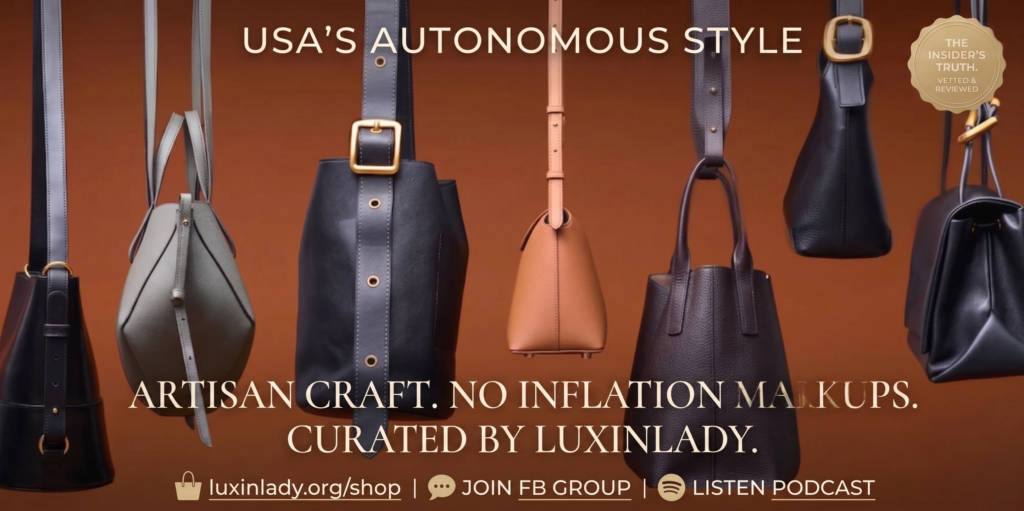
Let’s be completely honest for a second. If you’ve walked into a high-end luxury boutique in Beverly Hills, New York’s Soho, the Miami Design District, or the Galleria in Dallas anytime in the last three years, you’ve probably felt it—that distinct, uncomfortable shift in the air. The velvet ropes feel less like an invitation to an exclusive world and more like a deliberate, exhausting barrier.
Between the aggressive, seemingly arbitrary bi-annual price hikes that defy all economic logic, the noticeable decline in the quality of canvas and leathers, and the humiliating “pre-spend” games European heritage houses make you play just to be offered the privilege of buying a basic designer handbag, the magic of luxury shopping has started to fade.
For modern, financially intelligent American women in their 20s, 30s, and beyond, the math simply no longer makes sense. We are funding our 401(k)s, navigating a high-cost-of-living economy, investing in real estate, and building our careers. We love the heritage aesthetics, we appreciate the timeless silhouette of a classic flap, a structured designer tote, or a sleek crossbody bag, but we are categorically rejecting the artificial scarcity and the inflated markups.
This cultural fatigue has sparked a massive, albeit quiet, revolution across the United States. The insider move from Chicago boardrooms to Hamptons garden parties has shifted toward sourcing premium luxury bag alternatives. Specifically, the focus has moved beyond simple “fakes” to the highly specialized world of high-tier aaa bags, mirror quality bags, and flawless 1:1 replica pieces.
But here is where things get incredibly complicated for US shoppers. If you’ve ever typed “where to buy high quality replicas” or “aaa handbags online” into a search engine, you know it feels like navigating the Wild West.
As an industry insider who has spent over a decade analyzing luxury supply chains and the rise of the super fake bags market, I’m going to break down exactly how USA ladies can safely source a high-tier piece. This is your ultimate, comprehensively formatted masterclass on what to look out for, the hidden benchmarks of the industry, and how to build a world-class closet on your own terms.
Part I: The Psychology of the Modern American Shopper
To understand the booming market for fashion dupes, we first have to understand the psychological shift in American fashion. We are currently living in the era of “Quiet Luxury” and “Stealth Wealth.” Today’s style icon values the drape of a cashmere sweater, the cut of a tailored trouser, and the impeccable leather craftsmanship of her accessories.
When you prioritize craftsmanship over brand recognition, you become acutely aware of what you are actually paying for. Consider the traditional luxury retail model:
- The Manufacturing Cost: A $4,000 designer purse often costs the brand less than $300 to manufacture.
- The Marketing Markup: Millions spent on celebrity ambassadors and global billboard campaigns.
- The Real Estate Tax: Exorbitant rents for flagship stores in Manhattan, Paris, and Tokyo.
- The Artificial Scarcity: “Waitlists” designed purely to manufacture desire and FOMO (Fear Of Missing Out).
Savvy American women are opting out of this matrix. They are realizing that a meticulously crafted aaa purse made from the exact same European tannery leather provides 99% of the aesthetic and tactile joy for 5% of the price. This isn’t about “faking it”; it’s about closet curation and financial autonomy.
Part II: Decoding the Market Tiers (Know What You Are Buying)
The biggest misconception about the world of designer bag replicas is that everything comes from the same mysterious overseas warehouse. The market is highly stratified. Knowing the terminology and the visual cues is your first line of defense against scammers.
Below is the definitive industry breakdown of the three main tiers of designer copy handbags currently flooding the internet.
📊 The Replica Market Matrix: Street-Tier vs. Mid-Tier vs. 1:1 Mirror
| Feature / Component | 🚩 Street-Tier (Fast Fashion Fakes) | ⚠️ Mid-Tier (The Illusion of Quality) | 🏆 High-Fidelity (1:1 Replica / AAA Bags) |
|---|---|---|---|
| Price Range | $40 – $90 | $150 – $350 | $400 – $900+ |
| Material Source | Synthetic PU, PVC, or heavily corrected split-leather. Feels plasticky and cold. | Genuine leather, but low-grade. Often heavily coated with plastic resins to hide imperfections. | Imported European full-grain hides (e.g., Haas, Weinheimer). Matches authentic weight, pore structure, and smell. |
| Hardware Density | Hollow zinc alloy. Lightweight, room-temperature to the touch. Snaps and zippers feel cheap and catchy. | Mixed metals. May look okay from a distance, but plating is thin and prone to tarnishing within months. | Solid milled brass or marine-grade stainless steel. Heavy, cool to the touch. Plated in genuine 18K gold, palladium, or ruthenium. |
| Stitching Technique | High-speed, straight machine stitching. Thread is thin, synthetic, and often the wrong Pantone shade. | Machine stitching mimicking a slant. Tension is inconsistent; loose threads are common on the interior. | Traditional “Saddle Stitch” angle. Custom-waxed linen thread. Precise millimeter tension matching the authentic stitch count. |
| Edge Paint (Glazing) | Thick, glossy, rubbery plastic strip. Looks messy, bubbles easily, and peels in extreme weather. | Semi-matte, but applied too thickly. Often bleeds over the edges of the leather. | Hand-applied, multi-layered matte glaze. Sanded, baked, and flush with the leather grain. Thin and durable. |
| The “Smell Test” | Toxic chemical, glue, or gasoline odor. | Faint leather smell masked by heavy chemical processing agents. | Rich, earthy, slightly sweet scent of premium vegetable-tanned leather. |
| Best Use Case | Disposable props for a single social media photo. | Casual, low-stakes environments where close inspection is unlikely. | Boardrooms, galas, country clubs, and daily luxury rotation. Indistinguishable to the naked eye. |
💡 Insider Pro-Tip: If a seller on Instagram or a random website is offering a “Himalaya Niloticus Crocodile” bag for $250, it is mathematically impossible for it to be a 1:1 replica. True aaa handbags utilizing genuine exotic skins or top-tier calfskin require significant capital to produce.
Part III: The Authenticator’s Anatomy & QC Checklist
To truly understand what separates an investment-grade designer handbag replica from a cheap imitation, you must become a detective of details. When evaluating potential aaa bags, use this exact checklist that professional authenticators use.
🔍 The 5-Point Macro Inspection Checklist
- The Font & Engraving Depth
- What to look for: Look at the interior heat stamp and the hardware engravings (like the zipper pull or the lock).
- The Standard: On a true aaa purse, the font is custom-milled. The thickness of the lines, the serif on the letters, and the depth of the stamp must be microscopic perfection. The stamp should not be so deep that it burns and wrinkles the leather, nor so light that it fades.
- The Stitch Count (SPI – Stitches Per Inch)
- What to look for: Take a ruler to the macro photos. Count the stitches over a one-inch span on the handle or the flap.
- The Standard: Heritage brands have a strict SPI standard (often 6 to 8 stitches per inch depending on the model). Premium mirror quality bags will match this count exactly, ensuring the structural tension and visual rhythm are flawless.
- The Hardware “Click” and Glide
- What to look for: If you are buying in person or watching a video QC, listen to the hardware.
- The Standard: The turn-lock should have a deep, resonant, mechanical “click,” not a tinny rattle. Zippers should be premium YKK or Swiss Riri, gliding like butter without catching.
- The Date Code / Microchip Placement
- What to look for: The interior lining seams.
- The Standard: While modern authentic bags are moving to RFID microchips, high-end super fake bags factories have reverse-engineered these chips or perfectly replicated the legacy date code formats (e.g., the exact font and spacing of a “YKK” zipper stamp or a specific factory code stamp).
- The Slouch and Memory
- What to look for: How the bag behaves when empty.
- The Standard: A high-tier designer tote made of Clemence or Togo leather should have a natural, relaxed “slouch” when set on a table, but should not collapse entirely. It should possess “memory,” bouncing back to its general shape.
Part IV: The PSP Protocol & Conquering US Customs
If you are buying designer bag replicas online and the seller just asks for your credit card, takes your money, and says “trust me, it will arrive in two weeks,” run the other way. In the world of aaa handbags, transparency is the only currency that matters.
📸 The Art of the PSP (Pre-Shipping Photos)
Because these top-tier 1:1 replica bags are often made-to-order, a reputable seller acts as your personal proxy. Before your bag is boxed, you must receive a suite of high-resolution, macro photos of your exact bag.
The “Red Light / Green Light” System:
- 🟢 Green Light: The leather grain matches the authentic reference, the glazing is thin and flush, the hardware engraving is crisp, and the stitch count is perfect. You approve the bag for shipping.
- 🔴 Red Light: The hardware looks too yellow, the edge paint is messy, or the logo alignment is off by a millimeter. You reject the bag, and the factory must pull a new unit from their inventory for your inspection.
📦 Navigating the US Customs Minefield
For USA buyers, shipping is the most anxiety-inducing part. You do not want your designer handbags seized by CBP. Elite sourcing platforms use Triangle Shipping or Stealth Routing.
- Indirect Routing: Packages are shipped in bulk to a transit hub in a country with less stringent IP customs protocols (e.g., Southeast Asia or the Middle East).
- Re-labeling: From the hub, packages are re-labeled and shipped to the US as generic “Fashion Accessories,” “PU Leather Wallets,” or “Craft Supplies.”
- Stealth Packaging: The exterior box is plain, unbranded, and wrapped in plain brown paper to avoid drawing the attention of porch pirates or customs inspectors.
Part V: Beyond Handbags – The Full Luxury Ecosystem
The revolution in closet curation doesn’t stop at handbags. Once American women realize the sheer value available in the 1:1 replica market, they begin to upgrade every aspect of their travel and daily lives.
🧳 Luxury Luggage & Travel Totes
Why pay $3,500 for a hard-shell carry-on that will inevitably get scuffed by baggage handlers? The market for luxury luggage alternatives has exploded. High-end factories are producing carry-ons featuring aerospace-grade aluminum shells, silent 360-degree spinner wheels, and TSA-approved locks. Pair this with a durable, elegant designer tote for your laptop, and you are navigating JFK in ultimate style.
💳 Small Leather Goods (SLGs)
Cardholders, passport covers, wallets, and AirTag cases are the perfect entry point into the world of aaa purses. They are lower risk to ship, highly functional, and allow you to experience the premium leather craftsmanship on a daily basis. Pulling out a flawlessly stitched cardholder at a business lunch in Dallas is a subtle flex that only you will appreciate.
Part VI: The Curator Advantage: Enter Luxinlady
After years of dissecting the good, the bad, and the outright scams of the luxury alternative market, you realize that the best way to shop isn’t by hunting down individual factories on obscure forums—it’s by finding a curator whose standards align with yours.
For professional American women who lean towards “Quiet Luxury,” Luxinlady.org has quietly become the best-kept secret in the US market. They function as a high-end sourcing agency specifically tailored to USA buyers.
🌟 Why Luxinlady is the Gold Standard:
- Ruthless Vetting: They visit the factories, test the hardware density, and smell the leather. If a batch doesn’t meet their “Authenticator Approved” standard, they reject the entire production run.
- White-Glove QC: Their in-house team acts as your personal authenticator. They pull the bag, inspect it under macro-lenses, and send you the PSPs. They will point out flaws you might miss and refuse to ship until it is 100% perfect.
- Logistics Mastery: They handle the complex US customs routing, ensuring your aaa handbags arrive safely at your door in all 50 states.
- Instant Gratification: Through Luxinlady New Arrivals, you get access to the latest viral silhouettes and seasonal colorways immediately, bypassing the humiliating boutique waitlists.
You can bypass the noise and explore their core curated collections directly at the [Luxinlady Shop]. It feels less like browsing a replica site and more like walking into an appointment-only boutique in Tribeca.
Part VII: Care & Maintenance Guide for Your Investment
Buying a high-tier 1:1 replica is an investment in your personal style. Because these aaa bags are made from genuine, high-quality leathers, they require the same maintenance as their authentic counterparts.
🧴 The 4-Step Maintenance Routine
- Proper Storage: Never store your designer handbag in a plastic bag. Plastic traps moisture and causes mildew. Always use the breathable cotton dust bag. Keep it stuffed with acid-free tissue paper or a specialized bag pillow to maintain structural integrity.
- Conditioning (Togo & Clemence): Every 3 to 6 months, use a high-quality, pH-neutral leather conditioner. Apply a tiny amount to a microfiber cloth and buff in circular motions. This keeps the leather supple and prevents cracking in dry winter climates.
- Vachetta Care: Do not condition Vachetta leather. It is untreated and meant to develop a natural, dark patina through exposure to light and the oils from your hands. Keep it away from water and hand sanitizer.
- Hardware Polishing: Avoid exposing metal to perfumes or lotions. If smudged, wipe gently with a dry, clean microfiber jewelry cloth. Never use liquid silver or gold polish, as it can strip the micron plating.
Part VIII: Conclusion – Reclaiming Your Autonomy
Shopping for a designer replica bag isn’t about “faking it” anymore. It’s a deliberate, calculated choice by smart US consumers. It’s about recognizing that a beautiful, impeccably crafted leather good shouldn’t require a second mortgage or a subservient relationship with a retail sales associate.
When you understand the global supply chain, when you know the microscopic difference between cheap zinc and solid milled brass, and when you utilize trusted curators like Luxinlady, you take the power back. You get the aesthetic, the tactile luxury, and the confidence—all while protecting your financial peace of mind.
Whether you are searching for your first aaa purse or adding a tenth flawless 1:1 replica to your collection, the goal is the same: to look and feel your absolute best, entirely on your own terms.
Join the Inner Circle & Continue the Conversation
The world of mirror quality bags is constantly evolving. True connoisseurs don’t shop in a vacuum; they share their raw QC photos, their luxury unboxing experiences, and their brutally honest reviews of how aaa bags hold up to American city life.
🤝 Connect with the Community
Want to see raw, unfiltered, macro-lens photos from real US buyers? Want to ask questions about specific leather grains and get daily warehouse updates? 👉 [Join the Exclusive Luxinlady Facebook Group Here]
🎧 Deep Dive on the Go
Geek out on the macro-economics of the luxury industry, learn how to spot flawed stitching, and explore the future of the leather goods industry. 🎙️ [Listen to the Luxury Supply Chain Exposé on Spotify]
Disclaimer: This article is for educational, editorial, and informational purposes regarding the quality standards, material economics, and craftsmanship of global leather goods. Consumers should always be aware of and comply with their local, state, and federal laws and regulations regarding the importation, purchase, and ownership of replica items and intellectual property.